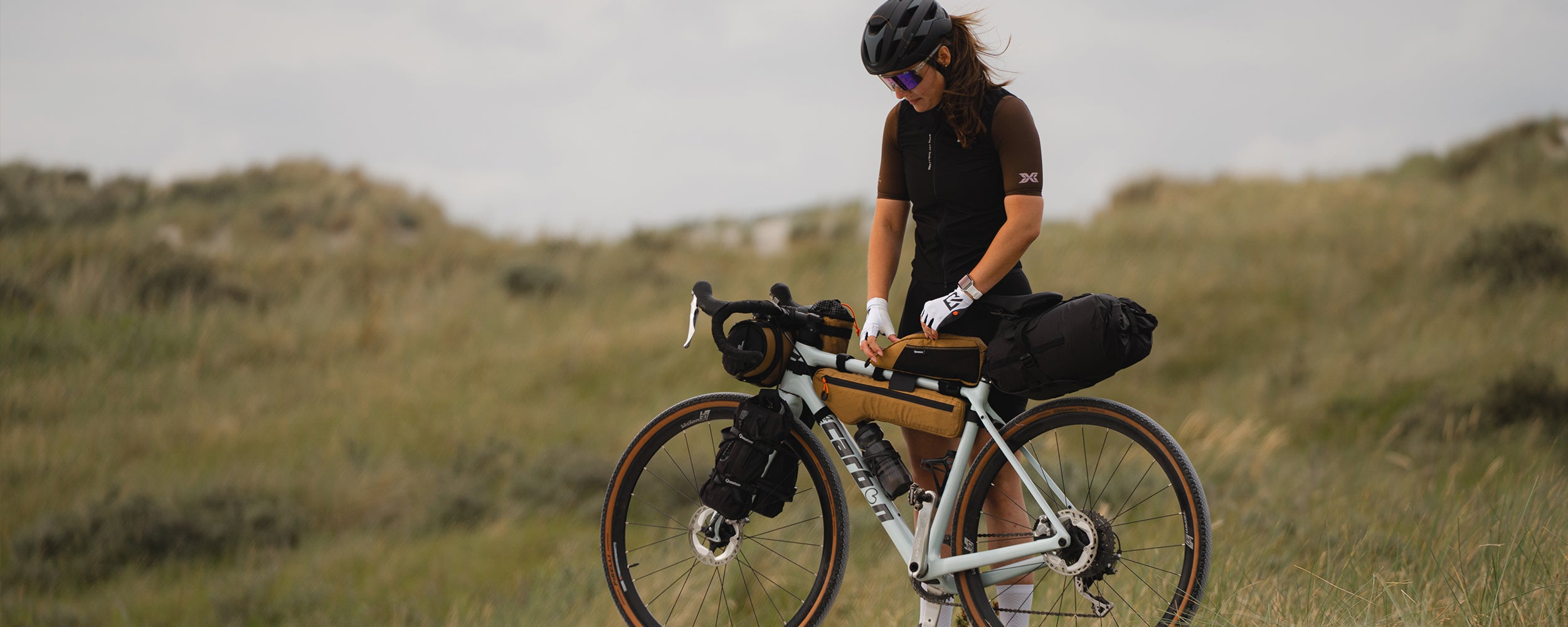
Why a Stable Rear Rack + Waterproof Bag System Is Essential for Long-Distance Bikepacking?
Discover how a stable rear rack combined with a waterproof bag keeps your bikepacking gear dry and secure. Learn system-level strategies for long-distance rides.

Long-distance bikepacking is not just about endurance or navigation—it's about reliability under prolonged environmental stress.
Riders face dynamic water exposure, from heavy rainfall to tire spray, river crossings, and overnight condensation. A single weak link in your gear system can cascade into insulation failure, wet clothing, and compromised safety.
This article explores why a stable rear rack combined with a waterproof bag is not just an optional upgrade, but a system-level solution for successful long-distance bikepacking.

Long-Distance Bikepacking Is a Moisture Management Challenge
Most riders associate waterproofing with rain protection. In reality, moisture comes from multiple vectors, including:
- Direct rainfall
- Rear wheel spray and rebounding water
- River crossings and standing water
- Overnight condensation and dew
- High-humidity environments in forests or valleys
Even a highly rated waterproof bag may fail if movement under load and repeated water impact are not considered.

Scenario One – Sustained Rain and Dynamic Water Pressure
Rain Exposure on Long Routes
- Rain on a moving bike is not static. On a loaded bike:
- Rear tire throws water upward
- Spray impacts the lower sections of bags
- Water is driven into seams, not just over the surface
Dynamic pressure during prolonged rain quickly exceeds the limits of stitched or “water-resistant” bags.

The Rear Zone as a Failure Hotspot
Field studies show rear-mounted bags are the most common point of waterproof failure.
- Lower sections absorb more water
- Vibration accelerates seam fatigue
- Roll-top closures lose compression if swayed
How a Stable Rear Rack + Waterproof Bag System Solves This
A stable rear rack drastically reduces movement, keeping the waterproof bag in its intended position. Benefits include:
- Minimized bag oscillation
- Reduced seam fatigue
- Lower exposure to tire spray
In effect, the system ensures the waterproofing survives prolonged rain, converting a temporary feature into long-term reliability.
Scenario Two – River Crossings and Hydraulic Pressure
Submersion Changes Water Dynamics
River crossings apply hydrostatic pressure to all surfaces:
- Seams stressed simultaneously
- Any micro-gap becomes a leak path
- Abrasive particles accelerate coating degradation
Without a stable rack system, soft-mounted bags are repeatedly flexed and more prone to failure.

Stability Extends Waterproof Lifespan
A rigid rear rack combined with a waterproof bag:
- Reduces flexing during water exposure
- Maintains roll-top compression
- Keeps seams oriented to minimize penetration
Thus, the system extends waterproof effectiveness over multi-day rides.
Scenario Three – Condensation, Dew, and Chronic Moisture
Subtle Moisture Accumulation
Even without rain, moisture accumulates from:
- Nighttime condensation
- Dew on grass and tent surfaces
- High ambient humidity
Soft-mounted bags tend to shift, increasing internal wetting risk.

System Thinking Prevents Gradual Failure
A stable rear rack + waterproof bag system:
- Maintains bag orientation
- Preserves internal dry space
- Protects insulation over multi-day exposure
This approach prevents progressive loss of thermal efficiency.
Strategic Waterproofing Priorities for Long-Distance Riders
Not all gear needs equal protection. Focus on:
- Sleep system and insulation layers
- Navigation electronics and power
- Critical clothing
The stable rear rack + waterproof bag system ensures moisture-sensitive items stay protected while minimizing systemic failure.

Conclusion – Treat Your Waterproofing as Infrastructure
In long-distance bikepacking, reliability matters more than minimalism.
A stable rear rack + waterproof bag system is not an upgrade—it is infrastructure:
- Protects gear from cumulative moisture
- Reduces failure caused by vibration and flexing
- Enhances load stability and riding efficiency
Riders who complete long-distance routes think in systems, not individual products.
This approach transforms waterproofing from a temporary feature into a long-term capability.